

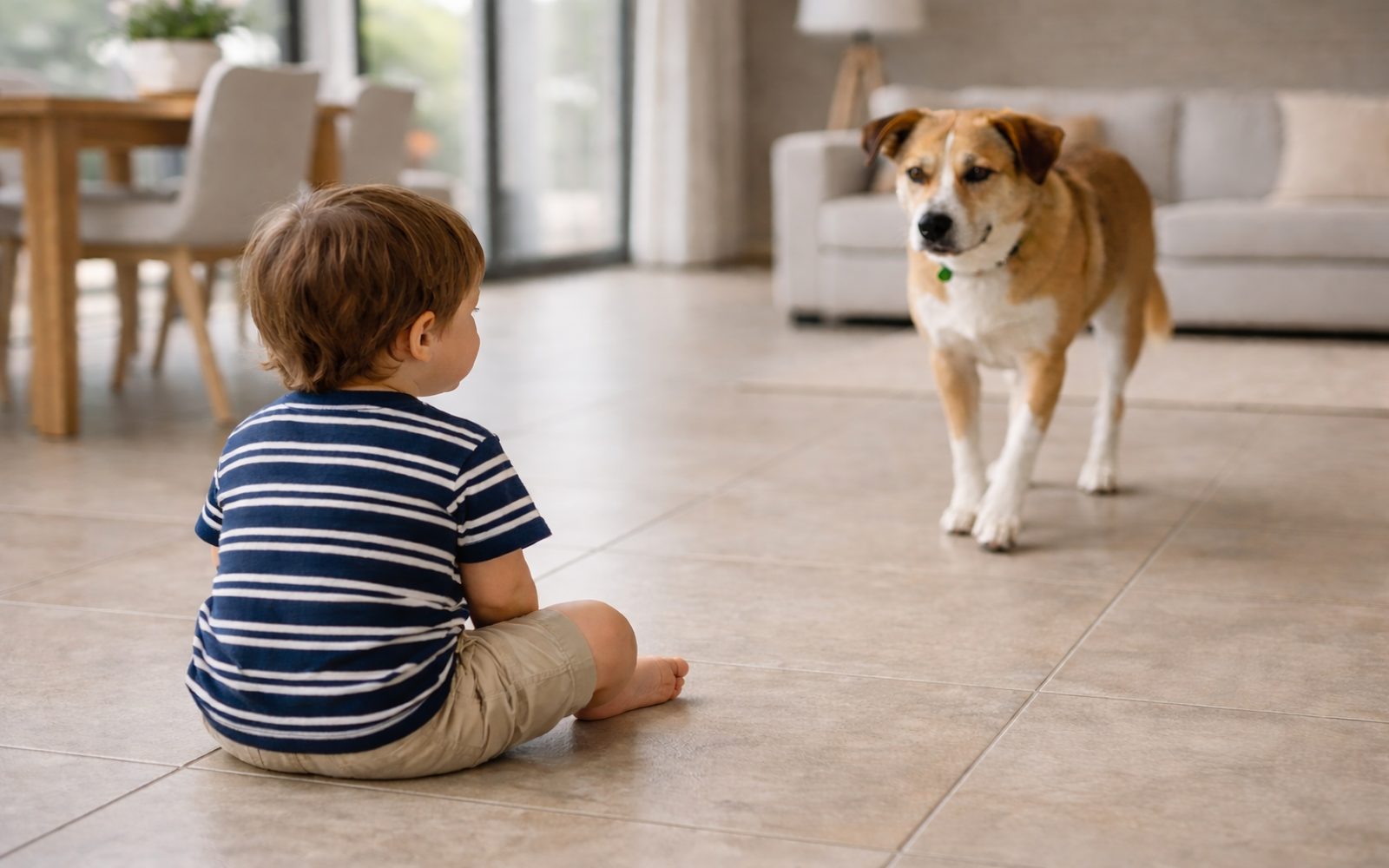
Tile flooring is often chosen for busy households because it handles spills, pet messes, and daily wear with ease. But when kids are running through the house or pets are racing from room to room, one detail becomes especially important: slip resistance. Not all tile surfaces offer the same level of traction, and understanding slip ratings can make a real difference in everyday safety.
This guide explains how tile flooring slip ratings work, what numbers actually matter in real homes, and how to choose tile surfaces that help reduce slips while still looking great.
Understanding tile slip ratings in simple terms
Slip ratings are designed to measure how much grip a tile surface provides when someone is moving across it. The most widely accepted system today is the Dynamic Coefficient of Friction (DCOF). Unlike older tests that measured traction when standing still, DCOF evaluates how slippery a surface feels while in motion — which better reflects how people and pets actually move through a home.
For interior residential spaces, a DCOF rating of 0.42 or higher is generally considered suitable, especially in areas where moisture or frequent traffic is expected. Higher numbers indicate more traction, while lower numbers may feel slick underfoot.
Why slip resistance matters in family homes
Kids and pets don’t slow down for wet spots or smooth finishes. They run, jump, slide, and stop suddenly, often barefoot or with paws that rely entirely on surface grip. Floors with poor traction can increase the risk of slips and falls, especially in high-activity areas.
Spaces where slip resistance matters most include:
Kitchens where spills are common
Entryways that collect moisture from outside
Bathrooms and nearby hallways
Laundry rooms and mudrooms
Choosing tile with better slip ratings helps create a safer environment without changing how the home looks or functions.
Surface finishes and how they affect traction
One of the biggest contributors to slip resistance is surface finish. Polished tiles are smooth and reflective, but they tend to offer less grip. Matte and textured finishes, on the other hand, create subtle resistance that improves stability underfoot.
Common family-friendly surface options include:
Matte-finish tiles that reduce slickness
Lightly textured tiles that mimic stone or concrete
Structured porcelain tiles engineered for traction
Many modern tile flooring options are designed to balance grip and easy maintenance, making them well suited for homes with kids and pets.
Glaze technology and slip performance
Not all glazed tiles are slippery. Some glazes are specifically formulated to improve traction, even when the floor is damp. These micro-textured or anti-slip glazes help maintain grip without making the surface rough or difficult to clean.
This type of finish is especially helpful in kitchens and bathrooms, where moisture exposure is frequent but comfort and cleanability still matter.
Choosing the right slip rating by room
Different areas of the home have different safety demands. Matching slip ratings to room use helps narrow down the best tile options.
Kitchens
Spills happen quickly and often. Tiles with higher DCOF ratings provide better traction during everyday cooking and cleanup.
Bathrooms
Water on the floor is unavoidable. Slip-resistant tile improves safety for kids stepping out of the tub or shower.
Living spaces
While usually dry, these areas see constant movement. A balanced slip rating prevents slickness without feeling overly textured.
Entryways
Tracked-in moisture increases slip risk. Durable tiles with textured surfaces perform better here than glossy finishes.
Exploring broader flooring choices alongside tile options can help tailor safety and performance to each room.
Porcelain vs ceramic for slip resistance
Both porcelain and ceramic tiles are popular for residential floors, but porcelain often offers better slip-resistant options. Its dense structure allows manufacturers to create surfaces with consistent texture and reliable traction.
Porcelain tiles also absorb less moisture, which helps maintain grip over time — an advantage in homes with pets and frequent cleaning routines.
The role of grout and layout in safety
Slip resistance isn’t only about the tile surface itself. Grout lines add natural traction, especially in smaller tile formats. More grout contact can slightly improve grip and reduce sliding.
Tile layout also matters. Staggered patterns, mosaics, or brick-style layouts introduce subtle texture variation that can enhance overall floor stability.
Safety and style can work together
Modern tile design has come a long way. Today’s slip-resistant tiles are available in wood-look planks, natural stone visuals, and clean contemporary styles. Choosing safer tile no longer means sacrificing appearance.
With the right finish and layout, tile floors can feel both stylish and secure for active households.
Making confident flooring decisions
Understanding slip ratings makes it easier to choose tile flooring that supports daily life with kids and pets. Rather than relying on appearance alone, slip resistance provides an extra layer of confidence that the floor will perform safely in real-world conditions.
The right tile choice helps reduce accidents while maintaining the durability and easy care that make tile such a popular option.
Schedule a flooring consultation today!
For guidance on choosing slip-resistant tile flooring that fits both safety needs and design goals, connect with a flooring expert for a complimentary in-home consultation by visiting the contact page.


